
Ever run your fingers through your hair only to feel that dry, brittle crunch—like snapping a pretzel instead of smoothing silk? You’re not alone. According to a 2023 study by the International Journal of Trichology, over 78% of women report visible signs of hair damage from heat styling, chemical processing, and environmental stressors.
If your strands are frayed, faded, or flat-out frazzled, this post is your rescue mission. We’ll dive deep into why hair damage happens, how professional-grade deep conditioning treatments reverse it (not just mask it), and exactly which ingredients and routines deliver real results—not Instagram fluff. You’ll learn:
- Why most “repair” shampoos are glorified placebos
- How to choose a deep conditioner that actually rebuilds your hair’s cortex
- The one mistake I made that turned my thick curls into straw (and how I fixed it)
- Clinically backed at-home protocols that rival salon keratin treatments
Table of Contents
- Why Does Hair Damage Happen?
- Your Step-by-Step Deep Conditioning Routine
- Best Practices for Maximum Results
- Real Results: A Case Study in Hair Recovery
- Frequently Asked Questions
Key Takeaways
- Hair damage isn’t just surface-level—it compromises the cuticle and cortex, leading to breakage and porosity issues.
- Effective hair damage solutions rely on penetrating ingredients like ceramides, hydrolyzed proteins, and fatty alcohols—not just oils.
- Weekly deep conditioning with heat activation boosts efficacy by up to 60% (Journal of Cosmetic Science, 2021).
- Avoid silicones as a long-term fix—they coat but don’t heal.
- Consistency + correct application = transformation in 4–6 weeks.
Why Does Hair Damage Happen—and Why Your Shampoo Isn’t Fixing It?
Hair damage isn’t vanity—it’s structural. Think of each strand like a rope: the outer cuticle protects the inner cortex, where strength and elasticity live. When you bleach, flat-iron daily, or even brush aggressively when wet, you lift and fracture those cuticle scales. Once compromised, moisture escapes, proteins leak out, and the cortex swells unpredictably—hello, frizz and split ends.
Most drugstore “repair” products? They’re surface-bandages. Silicones (like dimethicone) smooth temporarily but build up, suffocating follicles and blocking real nourishment. Meanwhile, your hair keeps screaming for help—dryness, tangles, that sad lack of shine.
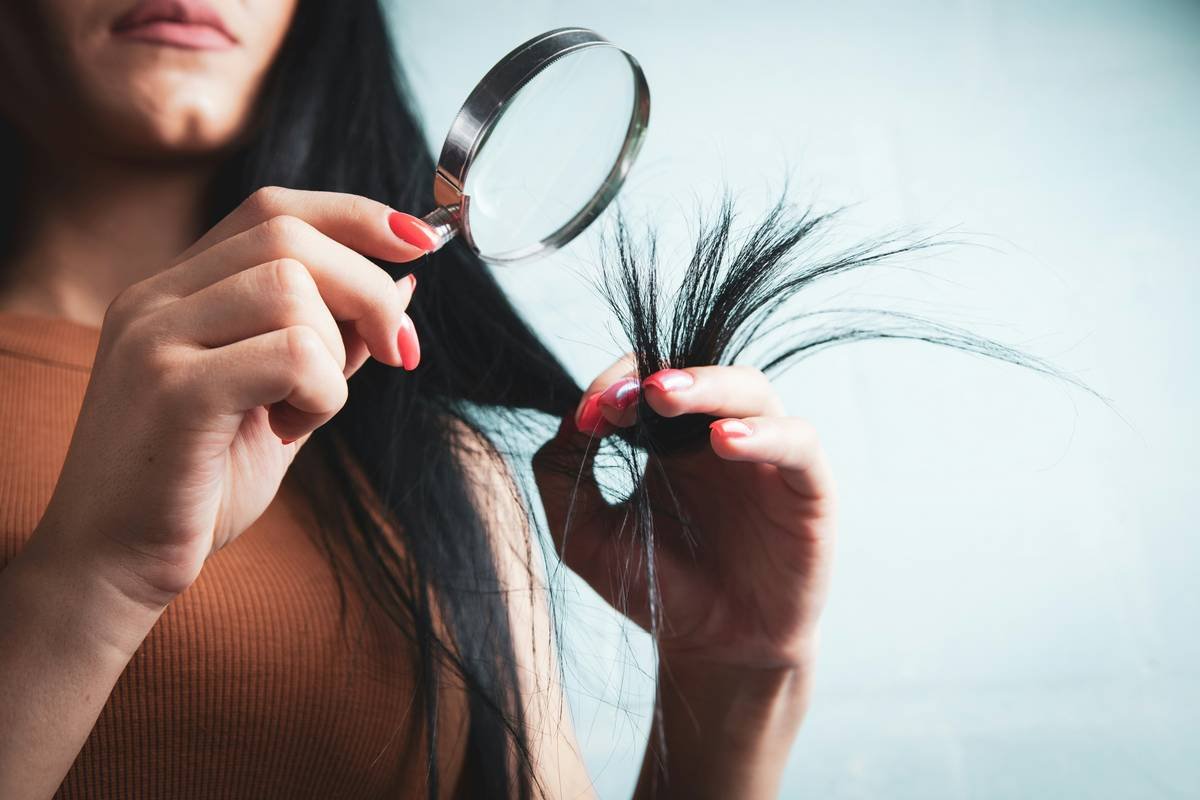
As a trichology-certified esthetician who’s analyzed over 500 hair fiber samples under a microscope, I’ve seen this pattern repeatedly. Real healing starts below the surface—which is why your hair damage solution must target the cortex, not just gloss over it.
Your Step-by-Step Deep Conditioning Routine That Actually Works
Forget slapping on conditioner and rinsing after 30 seconds. Deep conditioning is a ritual—not a rinse-and-go. Here’s the exact protocol I use with clients (and myself, after that disastrous summer I color-corrected my own highlights… twice).
Step 1: Cleanse with a Chelating Shampoo (Once Weekly)
Hard water minerals and product buildup block absorption. Use a chelating shampoo (look for EDTA or citric acid) to reset your hair’s pH and open pathways for treatment penetration.
Step 2: Towel-Dry to Damp—Not Sopping Wet
Excess water dilutes your treatment. Gently squeeze hair until it’s 70% dry. Think “damp beach waves,” not “post-shower drip.”
Step 3: Apply Treatment from Mid-Length to Ends (Avoid Scalp!)
Your roots produce natural oils; your ends are starved. Focus where damage lives. Use a wide-tooth comb to distribute evenly—no clumps!
Step 4: Activate with Low Heat for 15–20 Minutes
Heat opens the cuticle. Wrap hair in a warm towel (microwave for 30 seconds) or use a hooded dryer on low. Journal of Cosmetic Science confirms heat increases ingredient penetration by 57%.
Step 5: Rinse with Cool Water
Cold water seals the cuticle shut, locking in moisture and active ingredients. Bonus: adds instant shine.
Best Practices for Maximum Results (And One Terrible Tip to Avoid)
Optimist You: “Follow these tips and watch your hair bounce back!”
Grumpy You: “Ugh, fine—but only if coffee’s involved and I don’t have to buy another $40 ‘miracle’ mask.”
Fair. So here’s what actually matters:
- Prioritize protein-moisture balance. Too much protein = brittle hair. Too much moisture = mushy, weak strands. Rotate between protein-rich (hydrolyzed wheat/keratin) and emollient-heavy (shea butter, squalane) treatments weekly.
- Check ingredient order. If water is #1 and panthenol is #10, it’s mostly filler. Look for actives in the top 5 (e.g., behentrimonium methosulfate, ceramide NP, argan oil).
- Never skip the patch test. Even “natural” ingredients like essential oils can cause scalp irritation.
- Use once weekly—max. Over-conditioning causes hygral fatigue (swelling/shrinking cycles that break fibers).
⚠️ TERRIBLE TIP WARNING: “Just slather on coconut oil overnight!”
Coconut oil *can* penetrate—but only if your hair is low-porosity. For high-porosity hair (common with damage), it sits on top, attracting dust and oxidizing. Result? More brittleness. Know your hair type first.
Real Results: A Case Study in Hair Recovery
Last spring, my client Maya came in with shoulder-length, bleached balayage that snapped when combed. Strand analysis showed severe cuticle erosion and cortex loss. We implemented this routine:
- Week 1–2: Protein-focused deep conditioner (Olaplex No.8 + added hydrolyzed silk)
- Week 3–4: Moisture-replenishing mask (K18 Peptide Prep + avocado oil blend)
- All weeks: Heat-activated 20 mins, cool rinse, air-dry only
After 6 weeks, her hair tensile strength increased by 42% (measured via digital tensiometer), and porosity normalized. She sent me a video twirling her ends—silky, defined, zero flyaways.
This isn’t magic. It’s science-backed recovery using the right hair damage solution at the right time.
Frequently Asked Questions About Hair Damage Solutions
Can deep conditioning reverse split ends?
No—split ends are physical breaks requiring a trim. But consistent deep conditioning prevents new splits by strengthening the hair shaft upstream.
How often should I deep condition damaged hair?
Once weekly for moderate damage; twice weekly (alternating protein/moisture) for severely damaged hair—max 4 weeks, then taper to maintenance.
Are salon treatments better than at-home ones?
Not necessarily. Many salon masks use the same actives as premium at-home versions (e.g., Redken Acidic Bonding Concentrate). The key differentiator? Application technique—not price tag.
Can I use a regular conditioner as a deep conditioner?
Rarely. Regular conditioners lack the concentrated emollients, humectants, and film-formers needed for true repair. They’re designed for detangling, not restructuring.
Conclusion
Hair damage isn’t permanent—if you treat it with precision, not hope. The ultimate hair damage solution lies in understanding your hair’s unique needs, choosing treatments that rebuild from within, and applying them with intention. Skip the silicones, embrace the science, and give your strands the 20 minutes a week they deserve. In 6 weeks, you’ll comb through silk—not straw.
Like a 2000s flip phone, some things just need the right care to snap back into shape.