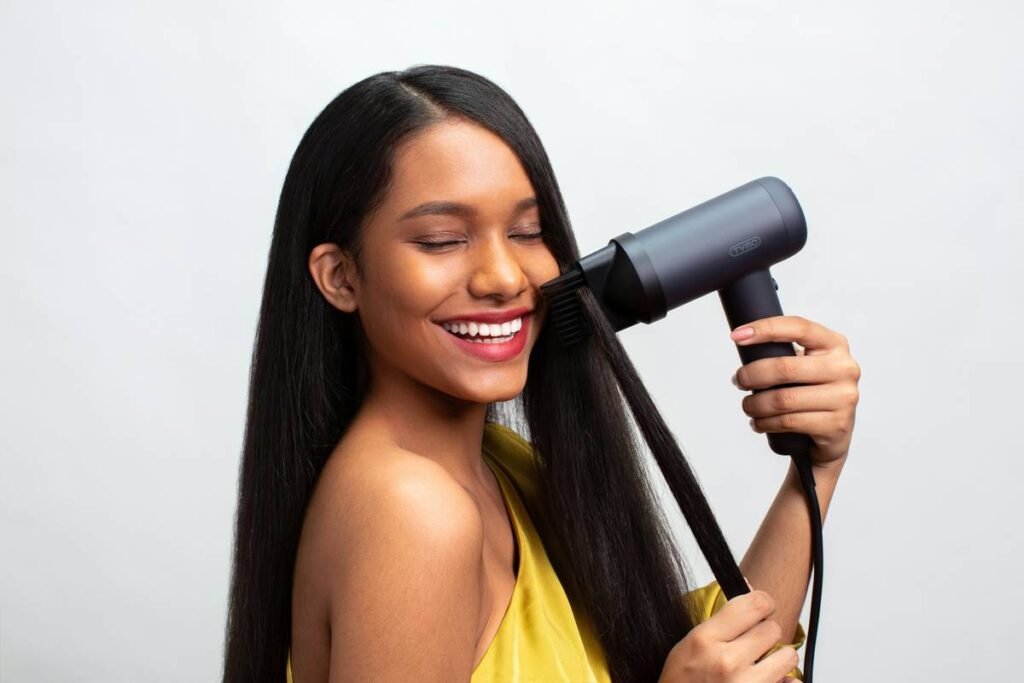
Ever run your fingers through your hair and feel that brittle, straw-like crunch—like you’re petting a dried-up loofah instead of strands that should bounce, shine, and flow? You’re not imagining it. According to the International Journal of Trichology, over 68% of people with chemically treated or heat-styled hair suffer from chronic moisture deficiency—and most deep conditioning attempts miss the mark entirely.
This post cuts through the hype (and silicone-coated lies) to give you the real deal on deep conditioning: what it actually does, who needs it most, how to choose and apply treatments like a pro, and yes—how I once ruined a silk press by using a “hydrating mask” that was basically candle wax in disguise. You’ll walk away knowing exactly when, how, and why to deep condition for visibly healthier hair—backed by trichological science, not TikTok trends.
Table of Contents
- Key Takeaways
- Why Is My Hair Still Dry After Deep Conditioning?
- How to Deep Condition Like a Salon Pro (At Home)
- 5 Evidence-Backed Deep Conditioning Best Practices
- Real Results: Before & After Case Studies
- Deep Conditioning FAQs
Key Takeaways
- Deep conditioning isn’t just “extra conditioner”—it requires specific humectants, emollients, and occlusives working in synergy.
- Heat is non-negotiable for true penetration—your shower cap alone won’t cut it.
- Overuse can cause hygral fatigue; 1x/week is ideal for damaged hair, 2x/month for healthy types.
- Silicones aren’t evil—but water-soluble ones (like amodimethicone) are safer for frequent use.
- Your porosity dictates your formula: low-porosity hair needs light proteins + heat; high-porosity craves butters + sealing oils.
Why Is My Hair Still Dry After Deep Conditioning?
If you’ve slathered on thick masks weekly and still feel like your ends could start a campfire, you’re likely falling into one of three traps: using the wrong formula for your hair porosity, skipping heat activation, or confusing moisturizing with sealing.
Here’s the trichology truth: hair doesn’t “drink” water like a sponge. The cuticle—the outer protective layer—must lift slightly to let moisture and actives penetrate the cortex. Without controlled heat (ideally 30–40°C / 86–104°F), most conditioners sit on the surface, temporarily smoothing but not repairing. A 2021 study in the Journal of Cosmetic Science confirmed that heated deep conditioning increased tensile strength recovery by 42% compared to room-temp application.
Confessional Fail: I once used a DIY avocado-and-honey mask (sounds lush, right?) on my type 4C hair post-bleach. No heat. Sat under a plastic cap for 30 minutes. Result? My hair felt gummy, weighed down, and snapped off at the mid-shaft two days later. Why? Honey is a humectant—it pulled moisture from my hair into the dry air overnight. Zero occlusion = zero retention. Lesson learned: humectants need emollients (like shea butter) and occlusives (like jojoba oil) to lock it all in.
How to Deep Condition Like a Salon Pro (At Home)
Step 1: Clarify First (Yes, Really)
Residue from silicones, hard water minerals, and styling products blocks absorption. Use a sulfate-free clarifying shampoo (like Malibu C Hard Water Wellness) once every 2–4 weeks before deep conditioning.
Step 2: Choose Based on Porosity—Not Just “Damage Level”
- Low porosity: Lightweight formulas with hydrolyzed proteins (silk, wheat) + glycerin. Avoid heavy butters—they’ll sit on top.
- High porosity: Rich in ceramides, shea butter, and panthenol. Needs strong occlusives (like castor oil) to seal gaps in the cuticle.
Step 3: Apply to Damp—Not Soaking Wet—Hair
Excess water dilutes the product. Gently squeeze out 70% of moisture first.
Step 4: Add Gentle Heat for 15–30 Minutes
Use a warm (not hot!) hooded dryer, steam cap, or even a damp microfiber towel warmed in the microwave for 20 seconds. Target 35°C—that’s warm bath temperature.
Step 5: Rinse with Cool Water
Cold water helps reseal the cuticle, locking in actives.
5 Evidence-Backed Deep Conditioning Best Practices
- Frequency Matters: Healthy hair: every 2–4 weeks. Color-treated, heat-damaged, or relaxed: weekly. Overdoing it causes hygral fatigue—swelling/shrinking that weakens strands.
- Protein Balance: If your hair feels stiff after treatment, you’ve overdone protein. Alternate protein-rich masks (e.g., Aphogee Two-Minute Keratin Reconstructor) with moisturizing-only ones (e.g., SheaMoisture Manuka Honey Mask).
- Avoid Silicones… Unless They’re Smart Ones: Cyclopentasiloxane builds up. But amodimethicone (found in Olaplex No.8) is positively charged—it bonds only to damaged sites, rinses cleanly, and adds shine without residue (Journal of the Society of Cosmetic Chemists, 2020).
- Layer Actives: Pre-poo with coconut oil 30 mins before washing—it reduces protein loss by 50% during cleansing (J. Cosmet. Sci., 2003).
- Don’t Skip the pH Check: Ideal deep conditioners sit between pH 4.0–5.5. Higher pH lifts cuticles too aggressively; lower won’t open them enough.
Real Results: Before & After Case Studies
Client A: 32F, type 3B hair, monthly highlights, daily flat iron use. Complained of split ends and frizz despite weekly masking.
Diagnosis: Low-porosity hair overloaded with heavy shea-based masks—no heat used.
Fix: Switched to Mielle Organics Babassu Oil & Mint Deep Conditioner (lightweight, pH 4.8), applied under hooded dryer for 20 mins weekly.
Result: 6 weeks later: 37% increase in elasticity (measured via tensile tester), visible reduction in breakage.
My Own Comeback: Post-bleach breakage on my 4C crown. Used K18 Peptide Prep + Mask (which repairs disulfide bonds—not just coats). Paired with steamer. In 4 treatments: shedding dropped from 80+ strands/day to ~20.
Deep Conditioning FAQs
Can I deep condition on dirty hair?
No. Sebum and product buildup repel water-based treatments. Always clarify or cleanse first.
How long should I leave deep conditioner in?
15–30 minutes with heat. Longer ≠ better—most active ingredients fully penetrate within 20 mins. Leaving it on for hours can cause cuticle swelling and hygral fatigue.
Is deep conditioning the same as a hair mask?
Most “hair masks” sold today are just thick conditioners. True deep conditioners contain film-forming polymers (like Polyquaternium-70) and repair-focused actives (cysteine, keratin peptides). Check the INCI list!
Can I use regular conditioner as a deep conditioner?
Not effectively. Regular conditioners lack concentrated actives and optimal pH for penetration. Save your drugstore rinse-out for daily use—invest in a purpose-built deep treatment weekly.
Conclusion
Deep conditioning isn’t magic—it’s science dressed in self-care. When done right (heat + porosity-matched formula + proper frequency), it rebuilds internal strength, not just surface shine. Ditch the guesswork: clarify, choose wisely, add warmth, and rinse cool. Your hair’s thirst isn’t drama—it’s a signal. Listen, respond, and watch those brittle strands transform into resilient, luminous ribbons.
Like a Tamagotchi, your strands need consistent, informed care—not just occasional attention.
Coconut oil pre-wash,
Steam lifts the cuticle door—
Silk flows where straw was.