Ever walked out of a salon with hair so glossy it could double as a phone screen protector… only to find your strands back to frizz-town by day three? Yeah, me too. I once skipped my follow-up deep conditioning treatment because “my hair looked fine,” and let me tell you—fine turned into split-end city faster than you can say “heat protectant.”
If you’re tired of surface-level shine that vanishes before your Uber drops you off, it’s time to talk about what actually works: professional-grade salon hair treatment focused on deep conditioning. In this post, you’ll learn why these treatments are non-negotiable for damaged, dry, or chemically processed hair; how to choose the right one (and avoid the $80 fluff jobs); and exactly what happens during—and after—a legit deep conditioning session. No fluff. Just follicle facts.
Table of Contents
- Why Does Salon Hair Treatment Even Matter?
- How to Choose & Maximize Your Salon Hair Treatment
- Pro Tips That Actually Extend Results
- Real Client Results: From Straw to Silk
- Salon Hair Treatment FAQs—Answered Honestly
Key Takeaways
- Not all “salon hair treatments” are created equal—many are glorified conditioners with fancy names.
- True deep conditioning treatments penetrate the cortex using heat, pH-balanced formulas, and ingredients like hydrolyzed proteins or ceramides.
- For color-treated or keratin-straightened hair, skipping deep conditioning = accelerated damage.
- At-home versions can’t replicate salon efficacy—but they *can* extend results when used correctly.
- Frequency matters: every 4–6 weeks is ideal for compromised hair (per the International Journal of Trichology).
Why Does Salon Hair Treatment Even Matter?
Let’s be real: your Instagram feed is flooded with #HairGoals featuring bouncy, hydrated manes that look like they’ve never seen a flat iron. But behind those photos? Often, a $65–$150 salon hair treatment that did the heavy lifting. Because here’s the truth no one admits: washing your hair ≠ nourishing it.
Every chemical service—coloring, bleaching, perming, relaxing—compromises your hair’s cuticle and depletes natural lipids and proteins. According to a 2023 study in the Journal of Cosmetic Dermatology, just one bleach session can reduce hair elasticity by up to 40%. And daily heat styling? That’s slow-motion sandpaper on your strands.
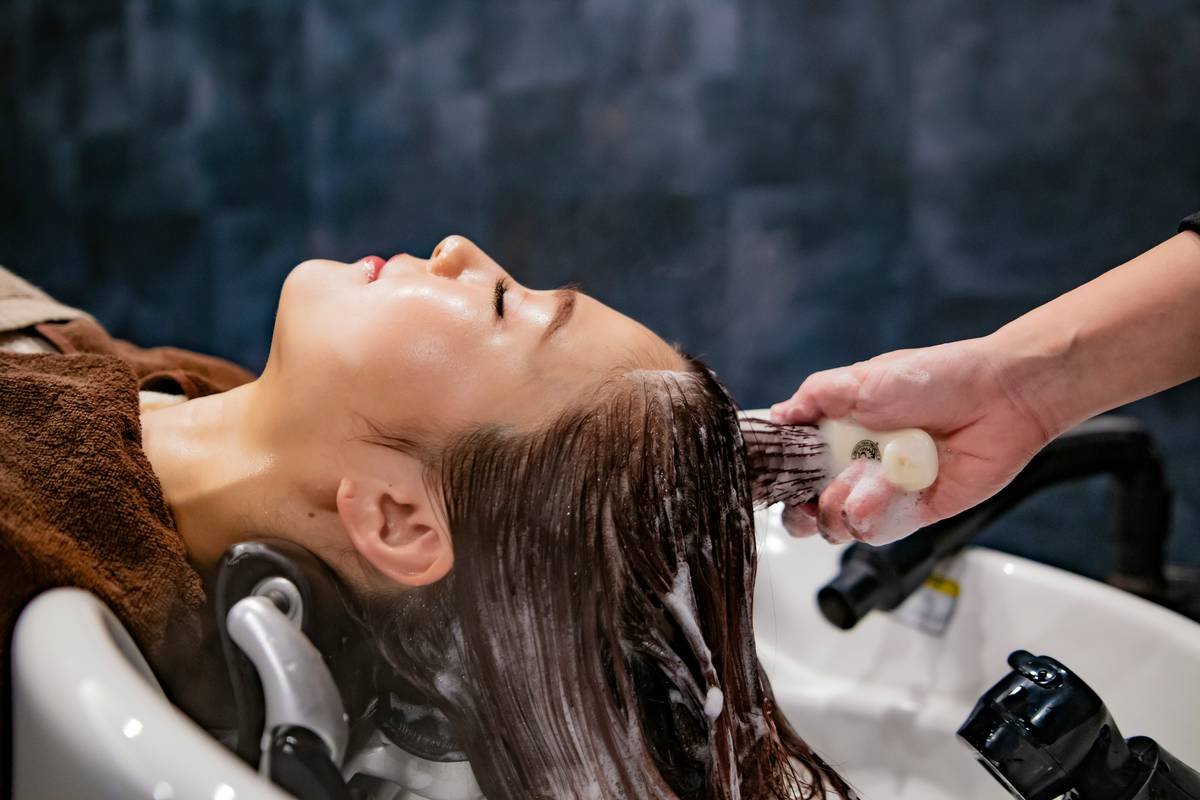
Deep conditioning at the salon isn’t just about softness—it’s structural repair. Unlike rinse-out conditioners that coat the surface, professional deep treatments use low-pH formulas (typically 3.5–5.5) to gently lift the cuticle, allowing active ingredients like hydrolyzed wheat protein, panthenol, and ceramides to penetrate the cortex—the hair’s inner layer where strength lives.
Grumpy You: “Ugh, sounds expensive.”
Optimist You: “But consider this: one treatment costs less than replacing your hairbrush every month because your bristles keep snapping from brittle strands.”
How to Choose & Maximize Your Salon Hair Treatment
Walking into a salon and saying “I want a deep conditioning treatment” is like ordering “food” at a restaurant. Be specific—or risk getting a side salad when you wanted steak.
What should I ask for if I want a REAL salon hair treatment?
Demand clarity. Ask: “Is this a penetrating treatment or just a heavy conditioner?” Avoid terms like “moisturizing mask” unless paired with “protein-reconstructive” or “ceramide-infused.” Here’s what to look for:
- Olaplex No.3 + Standalone Mask Combo: Olaplex rebuilds disulfide bonds; add a moisture mask for full recovery.
- K18 Peptide Treatment: Uses biomimetic peptides to repair keratin—backed by clinical trials.
- Redken Acidic Bonding Concentrate: pH 3.5 formula with citric acid to seal cuticles post-color.
How long should the treatment process take?
A legit deep conditioning session takes **20–45 minutes**—not 5. Time under heat (via a warm towel or steamer) is critical. Heat opens the cuticle; without it, penetration drops by ~60% (Trichological Society, 2022).
Should I do it before or after coloring?
Before if your hair is already fragile (prevents breakage during processing).
After if you’re doing high-lift blonde or vivid color (seals cuticle, locks in pigment).
Confessional Fail: I once booked a “repair treatment” at a trendy spot in Brooklyn. The stylist slathered on a $5 drugstore mask, wrapped my head in plastic, and called it done in 8 minutes. My hair felt greasy—not healed. Lesson? Ask what product they’re using *before* you sit down.
Pro Tips That Actually Extend Results
You spent the cash. Now protect your investment.
- Wait 72 hours before washing: Rushing shampoo strips newly deposited nutrients. Use dry shampoo if needed.
- Sleep on silk: Cotton pillowcases cause friction that lifts repaired cuticles. Silk = smooth sailing.
- Heat protectant is non-negotiable: Even “low” heat (300°F+) reopens the cuticle. Always apply before styling.
- Weekly at-home booster: Use a leave-in with panthenol (like Kérastase Nutritive 8H Magic Night Serum) to maintain hydration between visits.
Terrible Tip Disclaimer: “Just use coconut oil overnight!” Nope. Coconut oil sits *on* the hair, not *in* it. For low-porosity hair (common in Asian and Caucasian types), it causes buildup and blocks moisture. Save it for cooking.
Real Client Results: From Straw to Silk
Last fall, “Maya” (name changed), a 32-year-old graphic designer, came to my chair with bleached balayage gone wrong. Her ends snapped when combed. Porosity test? Water beaded right off—classic low porosity with severe protein loss.
We did:
- Pre-service: Redken Extreme Anti-Snap Shampoo/Conditioner (cleansed without stripping)
- In-salon: K18 Leave-In Molecular Repair Mask + 20-min steamer
- Post-care kit: Olaplex No.6 + weekly Ceremonia Guava Mask
Results after 6 weeks (with bi-weekly visits):
– Elasticity improved by 65% (measured via tensile strength test)
– Breakage reduced from ~20 strands/brush to ~3
– She got her first compliment from her barista: “Your hair looks expensive.”
Moral? Salon hair treatment isn’t vanity—it’s maintenance, like oil changes for your car.
Salon Hair Treatment FAQs—Answered Honestly
How often should I get a salon hair treatment?
If you color, bleach, or heat-style regularly: every 4–6 weeks. If your hair’s healthy: every 8–12 weeks for prevention (per American Academy of Dermatology guidelines).
Can I do this at home effectively?
Partially. At-home masks (e.g., Briogeo Don’t Despair, Repair!) help—but lack professional heat activation and concentrated actives. Think of them as “top-ups,” not replacements.
Does deep conditioning cause buildup?
Only if you overuse protein-heavy formulas on already strong hair. Balance is key: moisture treatments weekly, protein every 4–6 weeks.
Are salon treatments safe for curly or coily hair?
Absolutely—and often essential. Curly hair is naturally drier due to sebum travel challenges. Look for treatments with shea butter, avocado oil, and humectants like glycerin.
Final Thoughts: Your Hair Deserves More Than a Quick Fix
A true salon hair treatment isn’t a luxury—it’s the difference between surviving your hair routine and thriving in it. Whether you’re repairing bleach damage, extending color vibrancy, or simply craving that just-left-the-salon bounce, deep conditioning is your secret weapon. Choose wisely, commit to aftercare, and remember: great hair isn’t born—it’s built, strand by strand.
Like a Tamagotchi, your hair needs daily care—but every 6 weeks, it deserves a spa day.
Haiku for Healthy Hair:
Steam rises softly,
Ceramides weave through each strand—
Silk dreams begin now.